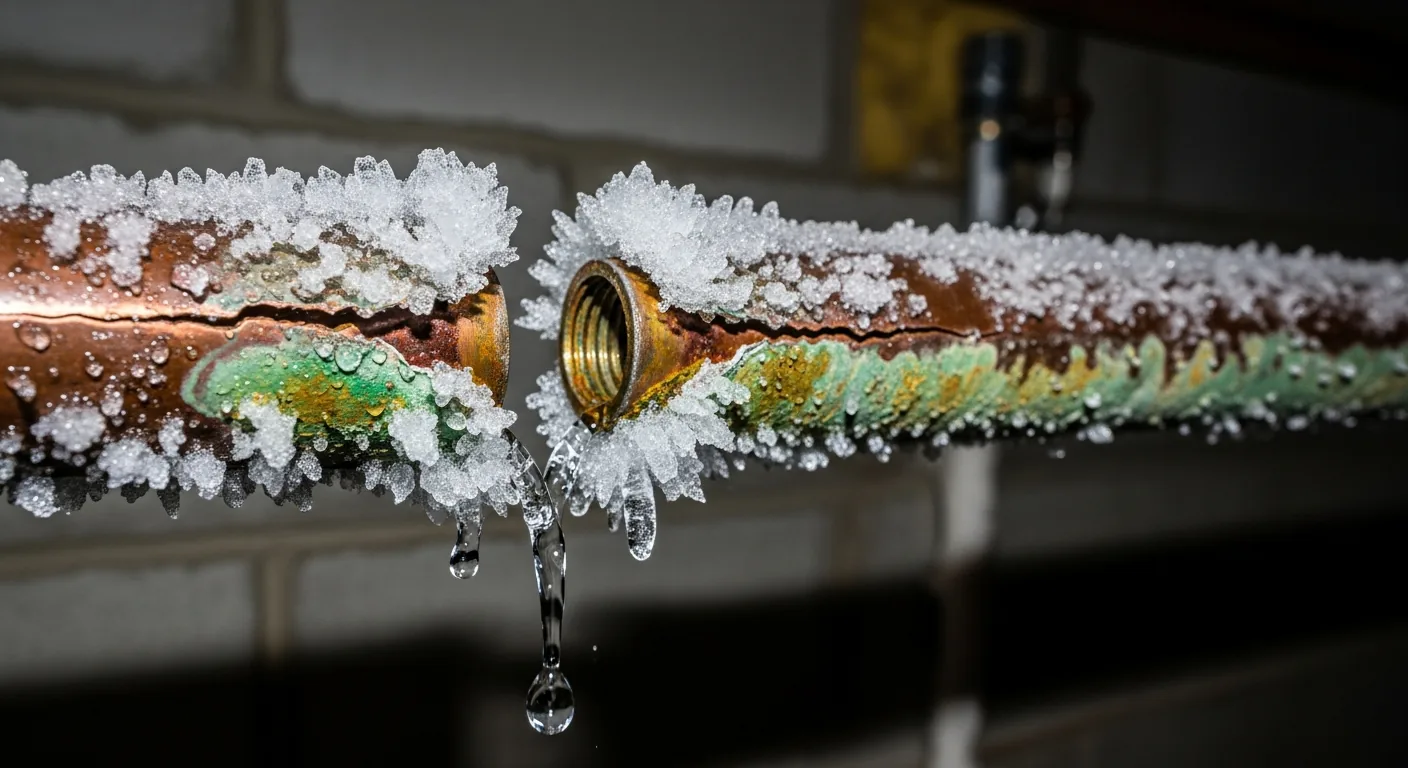
Frozen pipes are Edmonton's most common winter plumbing emergency. In a city that regularly sees overnight lows of -25°C to -35°C — and occasionally hits -40°C or colder — no home is completely immune. But most frozen pipe disasters are preventable. This guide tells you exactly what to do before winter hits, what to do if a pipe freezes, and how much you can expect to pay if things go wrong.
Why Frozen Pipes Are a Serious Risk in Edmonton
Water expands when it freezes — by about 9 percent in volume. A copper pipe has almost no flexibility. When ice forms inside, the pressure builds until something gives. The pipe doesn't necessarily burst at the frozen spot; it often cracks downstream where pressure accumulates. You might not even know the pipe is damaged until the thaw, when water starts flowing again and immediately pours through the crack.
Edmonton's record low is -49.4°C, set in 1947, but even typical winters produce multi-day cold snaps that can freeze poorly insulated pipes. A pipe in an exterior wall at -35°C can freeze completely within hours if the interior heat doesn't reach it.
Water damage from a burst pipe is one of the most expensive home insurance claims. In Edmonton, a single burst pipe can cause $10,000 to $50,000 or more in damage — soaked drywall, ruined flooring, damaged joists, and mould remediation costs that accumulate quickly.
Which Pipes Are at Highest Risk
Not all pipes are equally vulnerable. Focus your prevention efforts on these high-risk locations:
- Exterior walls — especially in older Edmonton homes where supply pipes were run through uninsulated wall cavities
- Crawl spaces — unheated crawl spaces in bungalows are a major risk, especially in Mill Woods and other areas with older ranch-style homes
- Attached garages — water lines that run through a garage wall or ceiling are frequently forgotten
- Pipes near exterior doors — kitchen sink pipes under a door wall, for example
- Hose bibs and irrigation systems — these need to be shut off and drained every fall
- Basement rim joists — the area where your floor framing meets the foundation wall is often poorly insulated
How to Prevent Frozen Pipes
The best time to winterize is September or early October — before the first hard frost hits. Here's a practical checklist for Edmonton homeowners:
- Disconnect and drain garden hoses before Thanksgiving weekend. Shut off interior hose bib valves and open the exterior bib to let any remaining water drain.
- Insulate pipes in cold areas. Foam pipe insulation sleeves are cheap and easy to install. Focus on crawl spaces, garage walls, and any pipe near an exterior wall.
- Seal air leaks near pipes. Cold air drafts through foundation cracks or rim joist gaps can freeze nearby pipes. Use spray foam to seal gaps.
- Keep your thermostat above 18°C even when you're away. If you leave Edmonton for the holidays, never turn the heat below 15°C.
- Open cabinet doors under sinks on extremely cold nights. This lets warmer air reach pipes on exterior walls.
- Let cold-area taps drip during severe cold snaps. Running water — even a slow drip — is much harder to freeze than standing water in a pipe.
- Drain your irrigation system in fall and have it blown out by a landscaping company before freeze-up.
🏠 Find Services By Neighbourhood
Looking for trusted tradespeople near you? Browse our Edmonton neighbourhood guides for local insights and service tips.
View All Edmonton Neighbourhoods →What to Do When a Pipe Freezes
If you turn on a tap and get little or no water — especially during a cold snap — you likely have a frozen pipe. Here's what to do:
- Find your main water shutoff and know where it is. If a pipe has already burst, you need to shut off water immediately. In Edmonton homes, the main shutoff is usually in the basement utility room near where the water line enters the house.
- Identify the frozen section. Check exterior walls, under sinks on outside walls, and in cold areas. Feel the pipe — frozen sections often feel very cold to the touch (obviously) and may have frost on the exterior of the pipe.
- Apply gentle heat. Use a hair dryer, an electric heating pad, or heated towels. Work from the tap end toward the frozen area so steam and pressure can escape. Never use an open flame — a blowtorch has caused Edmonton house fires when homeowners tried to thaw pipes.
- Keep the tap open. As the ice thaws, water will start flowing. Keeping the tap open relieves pressure and tells you when the pipe is clear.
- Check for cracks after thawing. Once water flows, inspect the pipe carefully. Even a pinhole crack will spray water under pressure. If you see any damage, shut off the water and call a plumber.
When to Call a Plumber
Call a licensed Edmonton plumber immediately if:
- You can't locate the frozen section of pipe
- The pipe has already burst or cracked
- You don't have safe access to the frozen pipe (inside a wall or under a concrete slab)
- You've thawed the pipe but still have no water — you may have multiple frozen sections
Edmonton plumbers charge $150 to $300 to deal with a straightforward frozen pipe. If repairs are needed after a burst, costs typically range from $350 to $1,500 or more depending on the location and extent of damage.
Insurance note: Most Alberta home insurance policies cover sudden and accidental water damage from burst pipes — but only if you've taken reasonable precautions. Leaving a house unheated in winter and having pipes burst may not be covered. Check your policy and call your insurer immediately if you have a burst pipe.