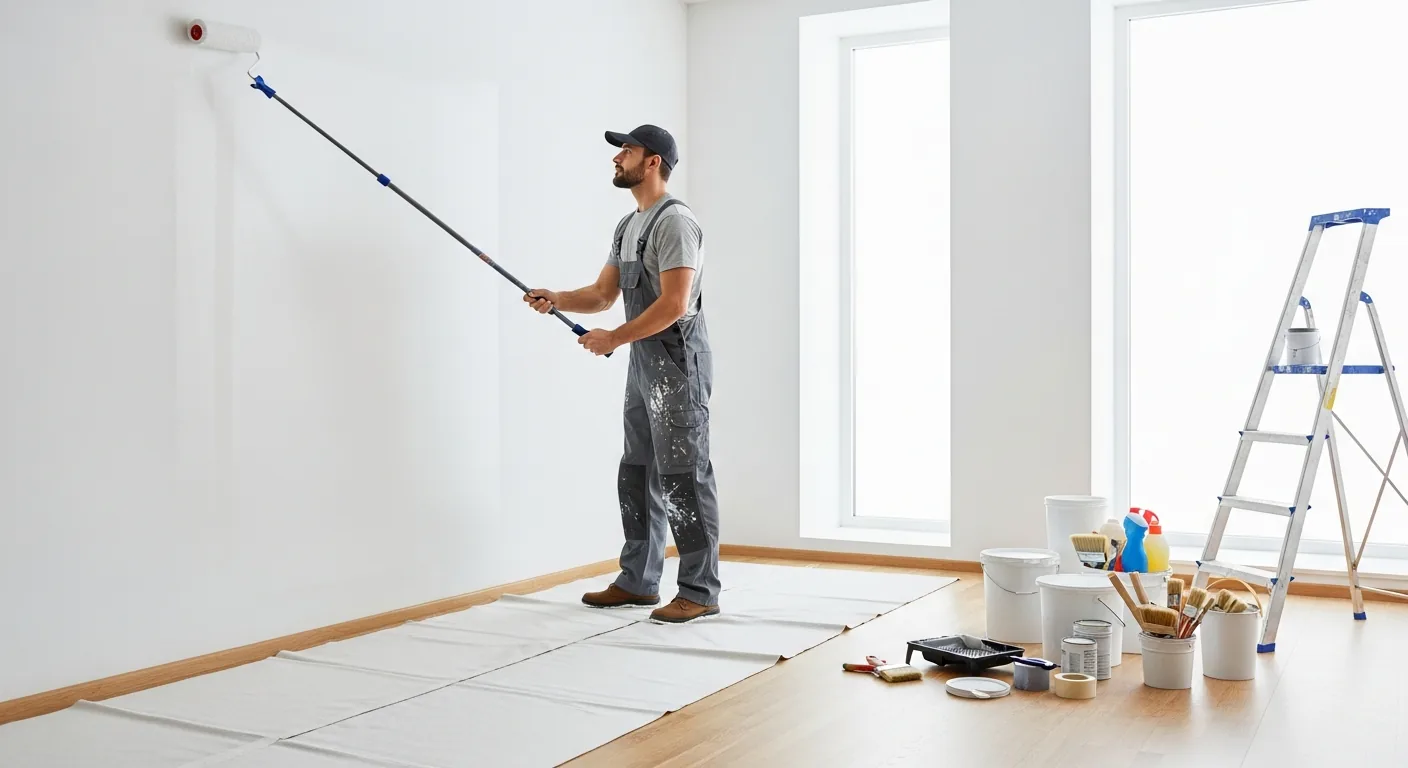
Painting is one of the most cost-effective ways to protect and refresh your Edmonton home. But Edmonton's climate — with temperature swings from -40°C to +30°C, intense UV summers, and freeze-thaw cycles that stress every exterior surface — demands more knowledge than just picking a colour. This guide covers interior and exterior painting in Edmonton, what products work, what they cost, and how to hire a painter you can trust.
Interior vs. Exterior Painting in Edmonton
The challenges are fundamentally different for interior and exterior painting in Edmonton, and knowing the distinction helps you make better decisions about timing, products, and hiring.
Interior painting can be done year-round in Edmonton. It's protected from weather and temperature swings. The main concern indoors is adequate ventilation during and after painting to allow proper drying and to clear paint fumes. Low-VOC paints have made indoor painting much more livable, but ventilation still matters.
Exterior painting is highly weather-dependent. In Edmonton, the practical painting window is May through September when temperatures are consistently above 10°C and rain is less frequent. Painting in cold temperatures causes adhesion failures, bubbling, and premature peeling — problems that can destroy a $10,000+ paint job within a year. The temperature requirement applies to both the air temperature AND the surface temperature of the substrate being painted.
Exterior Paint and Edmonton's Climate
Edmonton's exterior paint faces extreme stress. Choose the wrong product and you'll be repainting in 5 years instead of 10-15. Key considerations for Edmonton exterior paint:
- Elasticity: Edmonton surfaces expand in summer heat and contract in winter cold. Elastomeric or flexible paint formulas handle this movement better than rigid paints. Look for "flexible" or "elastomeric" in the product description.
- UV resistance: Edmonton's latitude gives us long summer days with strong UV. Fading and chalking are common with lower-quality exterior paints. Premium 100% acrylic formulas hold colour significantly longer.
- Low-temperature curing: Some premium exterior paints are rated for application as low as 2°C. This expands Edmonton's painting window into September and even early October.
- Mould and mildew resistance: Shaded north walls in Edmonton can retain moisture. Mould-resistant additives or paint formulas help prevent this.
Interior Paint in Edmonton Homes
For interior painting, Edmonton homeowners have more flexibility but still need to consider a few Edmonton-specific factors:
- Dry air in winter: Edmonton's winter humidity is very low — often 15-25% indoors when furnaces run. This affects how paint dries and how walls behave. Some finishes crack or fail over years in very dry environments.
- Concrete basement walls: Many Edmonton basements have unpainted or painted concrete. Basement paint needs to handle moisture vapour transmission from below grade — standard latex paint is not adequate here. Masonry sealers and epoxy-based basement paints are more appropriate.
- Sheen levels: Edmonton's newer homes often have open-plan main floors where sheen consistency matters. Flat paint hides imperfections but marks easily. Eggshell is the standard choice for most Edmonton living rooms. Semi-gloss for trim. Satin for bathrooms and kitchens.
What Professional Painting Costs in Edmonton
| Project | Typical Edmonton Cost |
|---|---|
| Paint a room (walls only) | $400 – $800 |
| Paint a full house interior (1,500 sq ft home) | $4,000 – $9,000 |
| Paint exterior (standard house) | $4,500 – $12,000 |
| Exterior stucco paint (specialty) | $6,000 – $15,000 |
| Deck staining or painting | $800 – $2,500 |
| Trim painting only (interior) | $1,500 – $4,000 |
🏠 Find Services By Neighbourhood
Looking for trusted tradespeople near you? Browse our Edmonton neighbourhood guides for local insights and service tips.
View All Edmonton Neighbourhoods →Exterior Paint vs. Staining in Edmonton
For wood surfaces — fences, decks, cedar siding, and wood trim — the choice between paint and stain has big implications for maintenance in Edmonton's climate.
Opaque stain penetrates the wood rather than forming a film on top. When Edmonton's freeze-thaw cycles stress the wood, stain can flex without peeling — which is its biggest advantage over paint on wood. It needs reapplication more frequently (5-7 years) but reapplication is easier and less costly than full paint stripping.
Exterior paint forms a harder film on wood. It provides better colour longevity and protection, but when it fails — and in Edmonton's climate it will eventually fail — it peels and must be fully stripped before repainting. On Edmonton cedar siding, this can be an expensive process.