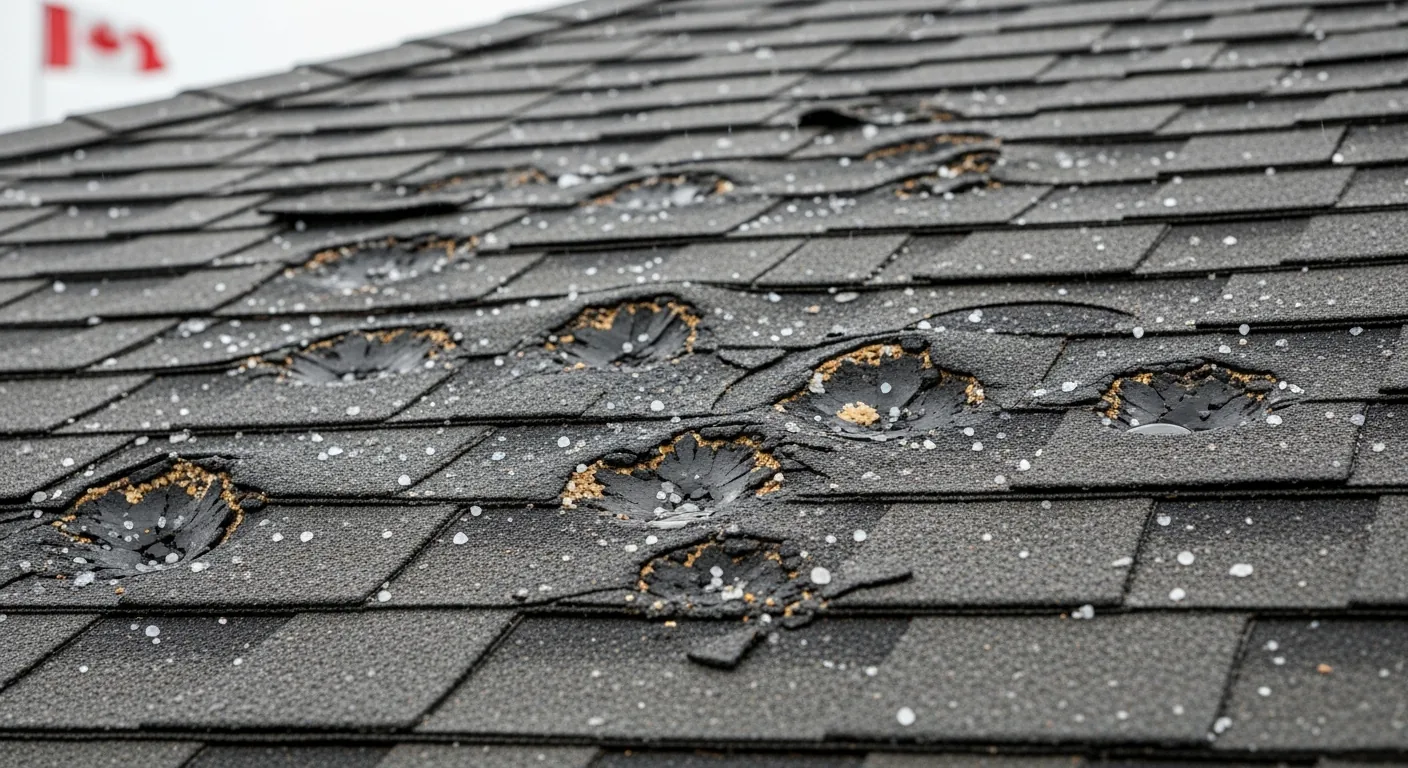
Edmonton gets hit by some of the most severe hail storms in Canada. The city sits in what meteorologists call "Hail Alley" — a zone stretching from Red Deer through Edmonton and northeast Alberta where warm, moist air from the south collides with cold fronts, producing violent summer storms. If your roof has been through a major Edmonton hail storm, this guide tells you exactly what to do.
What Hail Does to Edmonton Roofs
Hail damage to asphalt shingles isn't always visible from the ground. The stones knock away granules from the shingle surface, exposing the underlying asphalt mat to UV radiation. Once the mat is exposed, degradation accelerates rapidly — often turning a 15-year shingle into a 3-5 year shingle. Left unrepaired, damaged shingles lead to leaks, decking rot, and insulation damage.
Signs of hail damage on asphalt shingles:
- Dark circular or irregular marks ("bruises") where granules have been knocked loose
- Exposed black mat visible on shingle surface
- Dents in metal components — vents, flashings, gutters, downspouts
- Bruising or splatter marks on soft metals
- Granule accumulation in gutters (always present after heavy hail)
Metal roofs and Class 4 impact-resistant shingles handle hail significantly better than standard asphalt. Class 4 shingles are tested at 90 mph impacts and show minimal or no functional damage from typical Alberta hail. This is why they command a substantial insurance discount in Edmonton.
What to Do After a Major Hail Storm in Edmonton
- Do not go on your roof. Hail-damaged shingles are slippery and fragile. Leave roof inspection to professionals.
- Document the storm. Save any weather service reports about the storm date, size of hail, and storm path. Your insurer will ask for this.
- Call your insurance company promptly. Most Alberta home insurance policies cover hail damage under the "All Perils" or "Comprehensive" coverage. Contact your insurer within a few days — waiting too long can create claim complications. Your insurer will send an adjuster to assess the damage.
- Get an independent roof inspection. Before or after the insurance adjuster, get an inspection from a licensed, reputable Edmonton roofer. Some damage visible to a trained roofing inspector may not be obvious to an insurance adjuster. A written inspection report from a roofer gives you documentation to support your claim.
- Beware of storm chasers. After major Edmonton hail events, out-of-town roofing companies descend on the city offering fast, cheap repairs. Many of these companies have no local presence, no Edmonton building permits, and disappear after the job. Use local, established Edmonton roofers who pull permits and offer real warranties.
The Insurance Claims Process for Roof Hail Damage
The typical Alberta insurance claim process for hail damage:
- You report the claim to your insurer (by phone or app)
- An adjuster inspects the property — usually within 2-4 weeks after a major storm (can be longer when the whole city is hit)
- The adjuster writes an estimate. You may disagree with it — you can negotiate, provide your own contractor estimate, or invoke the appraisal process if you can't agree
- Your insurer approves the repair scope and issues payment (minus your deductible)
- You hire a licensed Edmonton roofer to complete the work
- Many insurers pay in two tranches: an initial payment to start repairs, and a "holdback" released after the work is complete and you provide proof of completion
🏠 Find Services By Neighbourhood
Looking for trusted tradespeople near you? Browse our Edmonton neighbourhood guides for local insights and service tips.
View All Edmonton Neighbourhoods →Upgrading to Impact-Resistant Shingles After Hail
If your roof needs replacement after a hail claim, this is the ideal time to upgrade to Class 4 impact-resistant shingles. The incremental cost over standard premium shingles is typically $1,500 to $3,000 for a full Edmonton home. The benefit: some Alberta insurers reduce your premium by 20-30% for the life of the roof. Over 15 years, those savings typically exceed the upgrade cost.
Ask your insurer before re-roofing whether they offer an IR shingle discount, and confirm which shingle products qualify. This conversation should happen before you sign with a roofer — the shingle selection should follow the insurance decision.