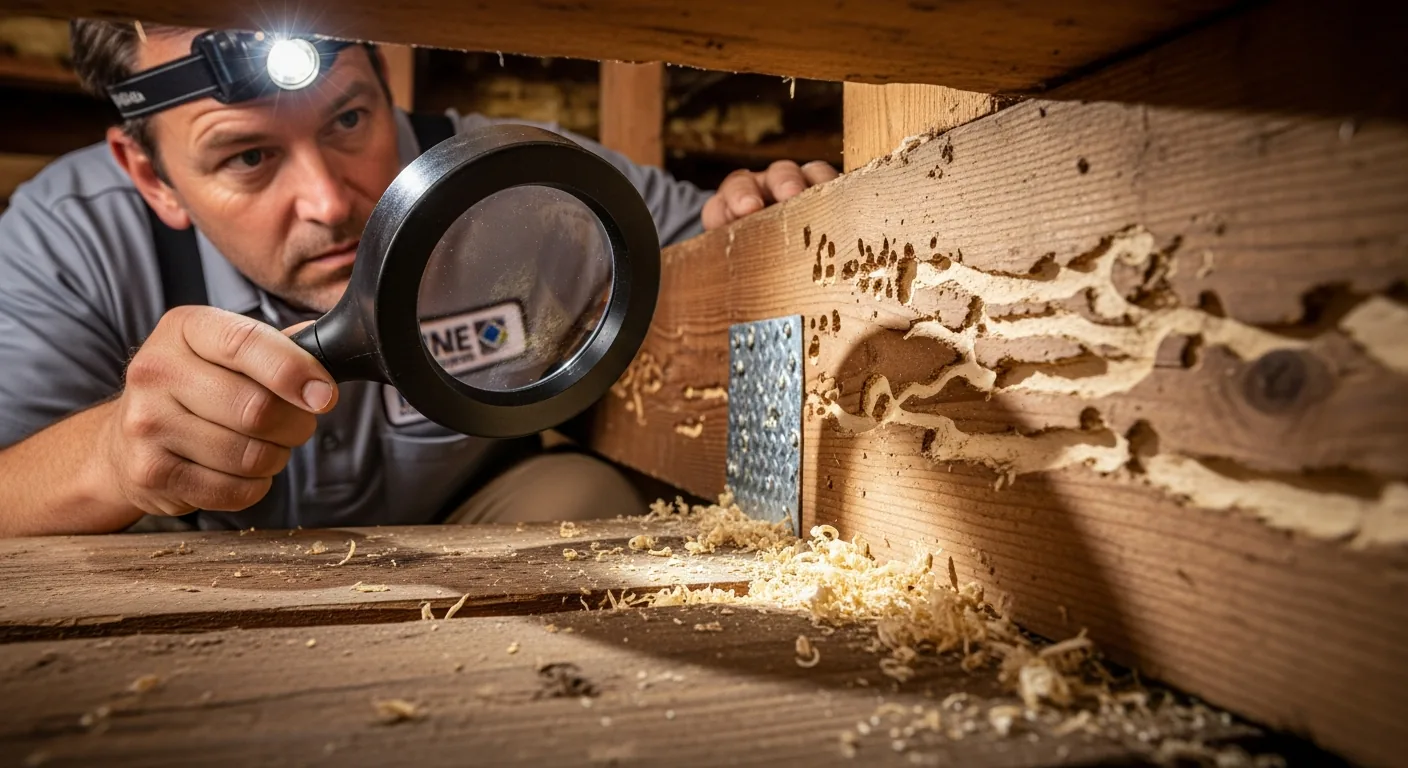
Carpenter ants are one of the most misunderstood pests in Edmonton. Many homeowners dismiss large black ants as harmless. They're not. Carpenter ants excavate galleries through wood to build their nests — and in Edmonton's older housing stock, with ageing wood that's sometimes affected by moisture, they can cause serious structural damage before they're detected. This guide tells you how to recognize a problem and what to do about it.
What Are Carpenter Ants and Why Does Edmonton Have Them?
Carpenter ants are large — worker ants are 6-12mm, queens can reach 20mm. They're typically black, though some species have partial red colouring. Unlike termites (which are not established in Edmonton), carpenter ants don't eat wood. They excavate it — removing wood fibres to create smooth galleries for nesting. The excavated material (called frass) is pushed out of exit holes and looks like coarse sawdust mixed with insect body parts and soil particles.
Carpenter ants in Edmonton most commonly nest in:
- Decaying or moisture-damaged wood — a common feature in Edmonton's older neighbourhoods, particularly in homes with roof leak history, plumbing leaks in walls, or aging deck structures
- Hollow areas around windows and doors
- Insulation in wall cavities and attics
- Large trees on or adjacent to the property — many Edmonton yards have mature trees, which are ideal carpenter ant habitat
- Log or wood-pile features in landscaping
Signs of Carpenter Ants in Your Edmonton Home
- Large black ants inside, especially in spring: Seeing 3 or more large ants indoors in spring is a warning sign. A few scouts in summer might wander in from outside; consistent indoor sightings suggest an indoor nest.
- Frass: Piles of coarse sawdust-like material mixed with insect body parts near baseboards, window frames, or structural wood. This is the strongest indicator of an active nest.
- Winged ants in spring: Reproductive carpenter ants (swarmers) emerge in spring to start new colonies. Seeing large winged ants inside your Edmonton home in May-June is a definitive sign of an established indoor nest.
- Rustling sounds in walls: Active carpenter ant colonies make audible sounds — a faint crinkling or rustling — particularly at night when they're most active.
- Soft or damaged wood: Probe suspect areas (around window frames, deck ledgers, roof eaves) with a screwdriver. Wood that's spongy or hollow is suspicious.
Carpenter Ant Treatment in Edmonton
Effective carpenter ant control requires finding and eliminating the colony — not just spraying foraging ants. Professional pest control in Edmonton typically uses:
- Perimeter spraying: Applied to the foundation, window frames, and entry points to create a treated zone that foraging ants carry back to the nest.
- Baiting: Protein and sugar baits that worker ants carry to the queen. Slower than spraying but more effective at reaching the colony.
- Direct nest treatment: When the nest can be located (frass tracking, acoustic detection, or inspection), direct dust or liquid treatment into the nest void is the most effective approach.
- Structural inspection and moisture correction: No treatment is permanent if the conditions that attracted carpenter ants — moisture damage, decaying wood — aren't corrected. A good pest control company will identify the root cause.
🏠 Find Services By Neighbourhood
Looking for trusted tradespeople near you? Browse our Edmonton neighbourhood guides for local insights and service tips.
View All Edmonton Neighbourhoods →Costs for Carpenter Ant Treatment in Edmonton
Professional carpenter ant control in Edmonton typically costs $300 to $700 for a full treatment program, which usually includes 1-2 treatments with a follow-up inspection. Repeat treatments may be needed if the nest isn't fully reached on the first visit.
If the infestation has caused structural damage that needs repair — rotting sill plates, damaged deck boards, compromised window frames — those costs are separate and can run from $500 to several thousand dollars depending on the extent.
Preventing Carpenter Ants in Edmonton
- Keep firewood away from the house — ideally stacked 30+ feet from the foundation and elevated off the ground
- Trim tree branches that touch or overhang your roof — they're ant highways
- Fix roof leaks, plumbing leaks, and drainage issues promptly — moisture damage is the most reliable predictor of carpenter ant problems
- Seal gaps around pipes, window frames, and utility penetrations
- Replace decaying wood in decks, fences, window frames, and sills before it becomes habitat