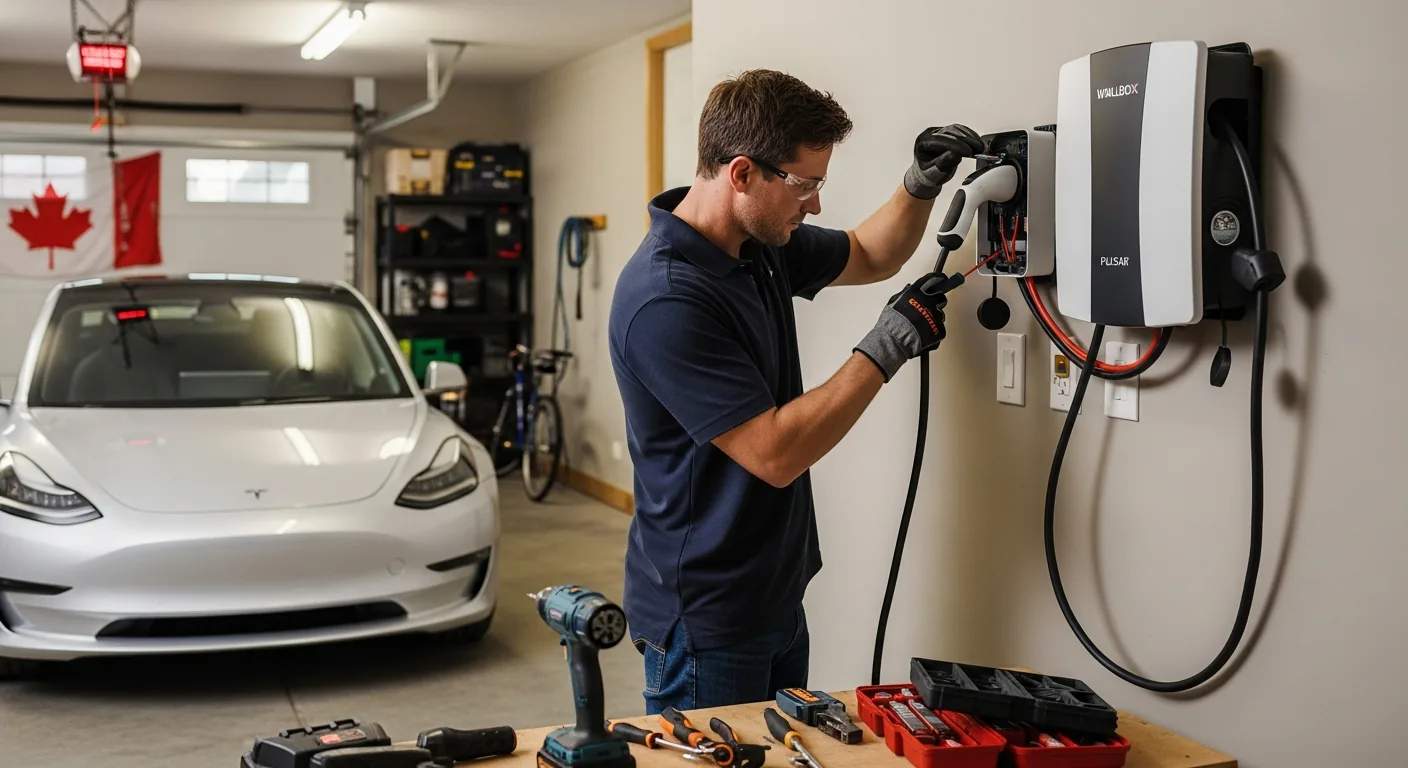
Electric vehicle ownership in Edmonton is growing fast, and for good reason — an EV in an Edmonton garage starts every winter morning fully charged and warm, without an engine block heater or a trip to the gas station in -30°C weather. But to charge efficiently at home, you need more than the standard outlet your car came with. This guide covers everything Edmonton EV owners need to know about home charger installation.
Level 1 vs. Level 2 Charging
Level 1 charging uses a standard 120-volt outlet — the same kind your phone charger uses. Every EV comes with a Level 1 cord. The problem: Level 1 adds only 8-15 km of range per hour of charging. If you drive 60-80 km per day in Edmonton — a typical commute to the suburbs and back — you'd need 5-8 hours of overnight charging just to break even. That's manageable but tight, and won't work for longer driving days.
Level 2 charging uses a 240-volt circuit — the same voltage as your clothes dryer or electric range. A Level 2 charger adds 25-50 km of range per hour, depending on your vehicle's onboard charger capacity. An overnight charge of 8 hours adds 200-400 km of range. For most Edmonton EV owners, Level 2 is the right answer.
Choosing a Level 2 Charger for Edmonton
When choosing a Level 2 charger (technically called an EVSE — electric vehicle supply equipment) for an Edmonton home, consider:
- Amperage: Most home chargers are 32 amps or 40 amps, which is sufficient for most EVs. Some faster chargers are 48 amps, but your car's onboard charger sets the actual limit — check your vehicle's spec.
- Cold weather performance: At -30°C, cable stiffness can be an issue. Look for chargers rated to -40°C with flexible cold-weather cables. This is more important in Edmonton than in most Canadian cities.
- Indoor vs. outdoor mounting: If you have an attached garage in Edmonton, indoor mounting is ideal. If you're charging in a detached garage or carport, ensure your charger is rated for outdoor use (NEMA 4 or similar).
- Smart features: Wi-Fi-enabled chargers let you schedule charging for off-peak hours (EPCOR's time-of-use rates) and monitor energy use. Not necessary, but convenient.
- Brand reliability: Established brands with North American service networks are worth the premium over off-brand alternatives.
Installation Costs in Edmonton
The cost of EV charger installation in Edmonton varies significantly based on your electrical panel, where you want the charger, and how much wiring is involved.
| Scenario | Typical Edmonton Cost |
|---|---|
| Charger unit (hardware only, 32A) | $400 – $900 |
| Installation (panel has capacity, charger near panel) | $400 – $700 labour |
| Installation (long run, conduit through garage) | $700 – $1,500 labour |
| Panel upgrade required (to add capacity) | $2,000 – $4,000 additional |
| Permit fees | $150 – $300 |
| Total (typical Edmonton install, no panel upgrade) | $800 – $1,800 all-in |
🏠 Find Services By Neighbourhood
Looking for trusted tradespeople near you? Browse our Edmonton neighbourhood guides for local insights and service tips.
View All Edmonton Neighbourhoods →Permits for EV Charger Installation in Edmonton
A Level 2 EV charger installation requires an electrical permit in Edmonton. This is because you're adding a new dedicated circuit to your electrical system — work that must be inspected by a Safety Codes Officer. Your electrician should pull the permit before starting work.
The inspection confirms that the circuit is properly sized, the breaker is appropriate, and the wiring is code-compliant. This matters for insurance too — an unpermitted electrical addition can create issues with your home insurer if there's ever a related claim.
EPCOR and EV Charging in Edmonton
EPCOR delivers electricity to most Edmonton homes. Currently, residential customers pay a flat rate per kilowatt-hour (with distribution and other charges). EPCOR has periodically offered time-of-use or off-peak pricing programs that incentivize overnight charging. Charging your EV from 11 pm to 7 am — when grid demand is low — is better for the grid and potentially cheaper if EPCOR offers time-shifting incentives.
Check EPCOR's current rate structures and any EV-related programs on their website. Alberta's deregulated electricity market also means you may be buying electricity from a retailer rather than EPCOR directly — check your bill to see who your retailer is, as some offer EV-specific rate plans.